
Final elbow certification through the OFA requires dogs to be at least 24 months of age. Most breeders learn this rule early and plan their final screening around it. What fewer breeders know is that the OFA offers a preliminary elbow evaluation available from 4 months of age that provides substantial predictive value for the final score and that can dramatically tighten the selection cycle within a breeding program. Preliminary screening is the most under-used tool in the canine orthopedic certification toolbox, and its wider adoption would accelerate the reduction of elbow dysplasia in every at-risk breed.
What the OFA Preliminary Evaluation Actually Is
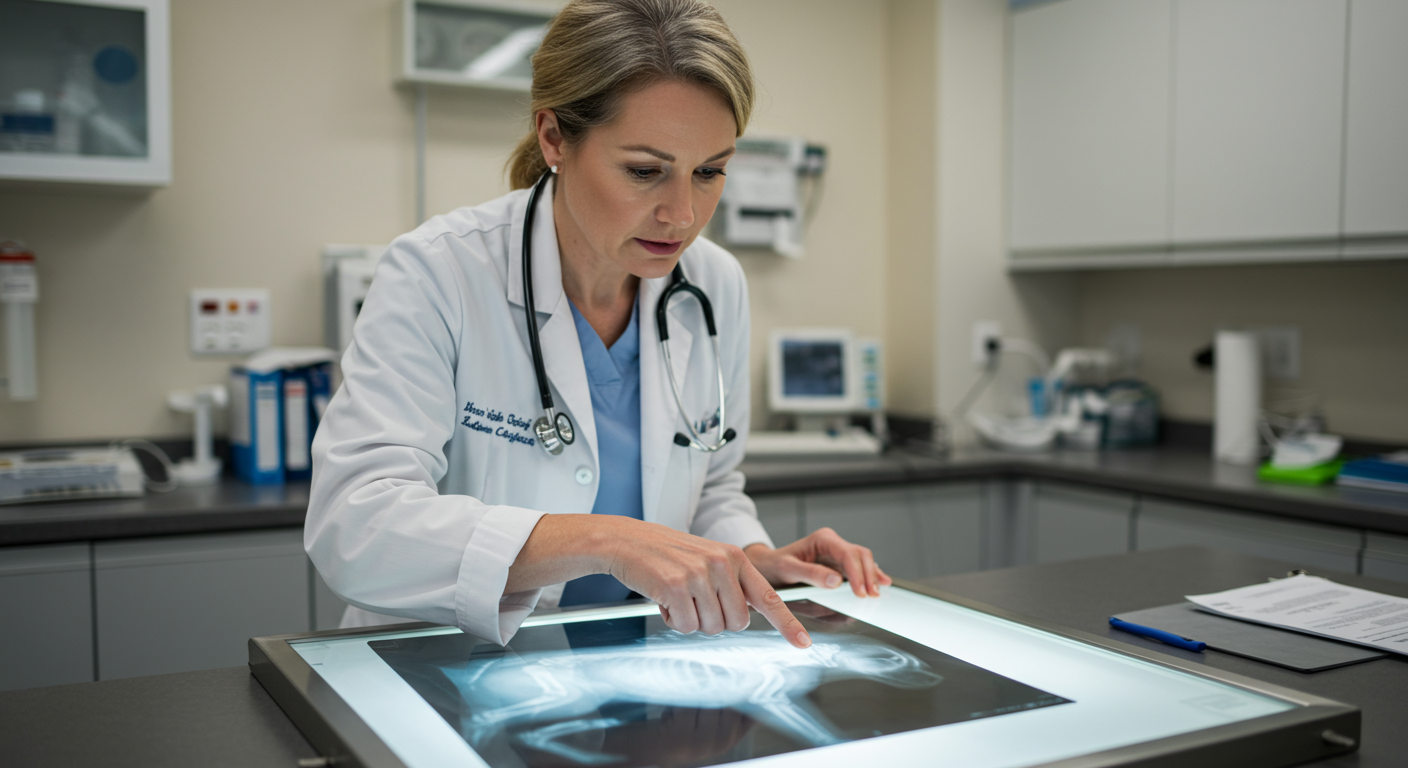
The OFA preliminary elbow evaluation uses the same radiographic technique and the same board-certified veterinary radiologist reader panel as the final certification. The key differences are the minimum age (4 months versus 24 months) and the status of the resulting report (preliminary assessment versus certified final score). The fee structure is also different — preliminary evaluations cost approximately $15 to $35 less than final submissions in most years.
Radiographic positioning requirements are identical. A flexed medial-to-lateral view of each elbow, properly positioned with the anconeal process and medial coronoid visualized, with the dog appropriately sedated for precise positioning. The films can be submitted digitally through OFA-approved veterinary practices, and results are typically returned within 10 to 21 days.
How Predictive Preliminary Results Really Are
Published validation data from OFA on preliminary-to-final correlation shows useful but imperfect predictive performance. In dogs with preliminary evaluations showing normal elbow joints (Grade 0), approximately 90% receive a normal final certification at 24 months. In dogs with preliminary Grade 1 findings, approximately 60% progress to higher grades by final certification. In dogs with preliminary Grade 2 or Grade 3 findings, essentially all receive an equivalent or higher grade at final submission.
These numbers have specific implications for breeding program design. A dog with a clean preliminary evaluation is highly likely to certify clean, meaning the breeder can confidently continue developing the dog through training, conditioning, and early breeding preparation. A dog with a borderline preliminary finding may or may not progress; additional diagnostic imaging (CT, advanced radiography) helps clarify the trajectory. A dog with a definitively abnormal preliminary evaluation is effectively disqualified from breeding programs that require certification, saving 20 months of program investment that would otherwise be wasted.
| Preliminary Grade (4–18 mo) | Probability of Same or Lower Final Grade at 24 mo | Breeding Program Implication |
|---|---|---|
| Normal (Grade 0) | ~90% | Proceed with development; re-evaluate at 24 mo |
| Grade 1 (mild) | ~40% | Borderline; obtain CT scan for clarification |
| Grade 2 (moderate) | <10% | Unlikely to certify; alternative placement |
| Grade 3 (severe) | 0% | Disqualified; do not breed |
The Timing Decision: When to Do Preliminary Screening
The OFA accepts preliminary evaluations from 4 months onwards, but practical timing should consider the balance between early information and radiographic maturity. At 4 to 6 months, the elbow joint is still developing and some subtle abnormalities may not yet be visible. At 9 to 12 months, the joint has matured enough that most dysplasia features are detectable, and the dog has had time to show clinical signs if present. At 15 to 18 months, the predictive value approaches that of final certification but the breeder has lost most of the time-saving benefit.
My recommendation for most breeding programs is a 10- to 12-month preliminary evaluation as the primary screening timepoint. This captures the majority of detectable pathology while leaving 12 to 14 months to either confirm clean findings at final certification or to redirect the dog's placement before significant program investment. For dogs with family history of early-onset elbow dysplasia, an earlier 6-month preliminary evaluation is worth the expense.
Integration With the Full Orthopedic Workup
Preliminary elbow screening works best as part of a coordinated orthopedic assessment rather than as an isolated test. A dog presenting for preliminary elbow evaluation should also receive preliminary hip evaluation at the same anesthetic event, since the radiographic positioning and sedation requirements overlap. This combined protocol reduces anesthetic exposure and cost for breeders managing multiple dogs.
For breeds with elevated elbow dysplasia prevalence including German Shepherds, Labrador Retrievers, Bernese Mountain Dogs, Rottweilers, and Newfoundlands, combining elbow preliminary evaluation with a standardized breed-specific screening protocol allows pattern recognition across the litter and the bloodline. A single dog with preliminary findings is one data point. Three littermates with findings signals a line-wide issue that warrants genetic analysis.
Cost-Benefit Analysis for Breeders
The case for preliminary screening is primarily economic. A breeder selecting dogs for long-term program inclusion invests approximately $3,000 to $8,000 per dog in training, conditioning, showing, health testing, and maintenance between 6 and 24 months of age. A preliminary evaluation at 10 months costs $70 to $180 depending on region and whether hip prelim is included in the same event. Discovering that a dog is unlikely to certify at the preliminary stage saves the majority of the 14 to 20 months of program investment that would otherwise follow.
For kennels producing multiple litters per year, the savings compound. A breeder evaluating eight potential prospects annually through preliminary screening will identify roughly one unsuitable prospect early each year, representing $5,000 to $8,000 in program savings per cycle. The preliminary screening costs approximately $600 to $1,400 for the same eight dogs, yielding a clear net benefit. Over a ten-year program career, preliminary screening pays for itself many times over.
What Preliminary Screening Cannot Do
Preliminary evaluation has real limitations that breeders should understand. It does not substitute for final certification — only the 24-month submission produces a permanent public OFA record that breed clubs and puppy buyers recognize. It does not detect conditions that develop after the preliminary screening, including traumatic injuries and late-developing osteoarthritis. It does not evaluate incongruity patterns that require advanced imaging such as CT; preliminary plain films are screening-level, not definitive.
Preliminary screening also does not replace the pedigree-based genetic risk analysis that properly informs breeding decisions. A dog with a clean preliminary and a family history riddled with elbow dysplasia carries higher risk than the clean preliminary alone suggests. Breeders should interpret preliminary results in the context of the full genetic background, not as a stand-alone pass/fail decision.
Getting Started With Preliminary Screening
Breeders new to preliminary screening should begin by identifying an OFA-familiar veterinary practice in their region. Not every practice is set up for proper OFA positioning, and positioning errors produce rejected films that waste anesthetic events and fees. The OFA maintains a searchable database of submitting veterinarians, and breed clubs often maintain regional recommendations for practices with high OFA submission volumes.
Schedule the preliminary evaluation during a routine visit that includes sedation — typically the spay, neuter, or dental cleaning appointment. Combining the procedures uses one anesthetic event for multiple purposes and reduces overall cost. The combined preliminary hip and elbow submission is the standard orthopedic preliminary protocol for most breeds and is the easiest entry point into systematic orthopedic screening.
Clinical Summary
OFA preliminary elbow evaluation from 4 months onwards is an under-used tool with strong predictive value for final certification, meaningful economic benefit for breeding programs, and minimal added risk compared to the routine anesthetic events most dogs already receive. Every systematic breeding program in an elbow-dysplasia-risk breed should incorporate preliminary screening at 10 to 12 months of age.